Sequence, connect, explain
Two ordering chains, two missing links and two written explanations. Say or write your explanation before revealing the example.
Move the steps using the buttons. No dragging is needed.
Two ordering chains, two missing links and two written explanations. Say or write your explanation before revealing the example.
Move the steps using the buttons. No dragging is needed.
Glycolysis supplies pyruvate; the link reaction supplies acetylcoenzyme A. The acetyl group enters a cycle that regenerates its acceptor. Reduced coenzymes produced along these pathways link oxidation of substrate to electron transfer.
Glycolysis occurs in the cytoplasm, not in the mitochondrial matrix.
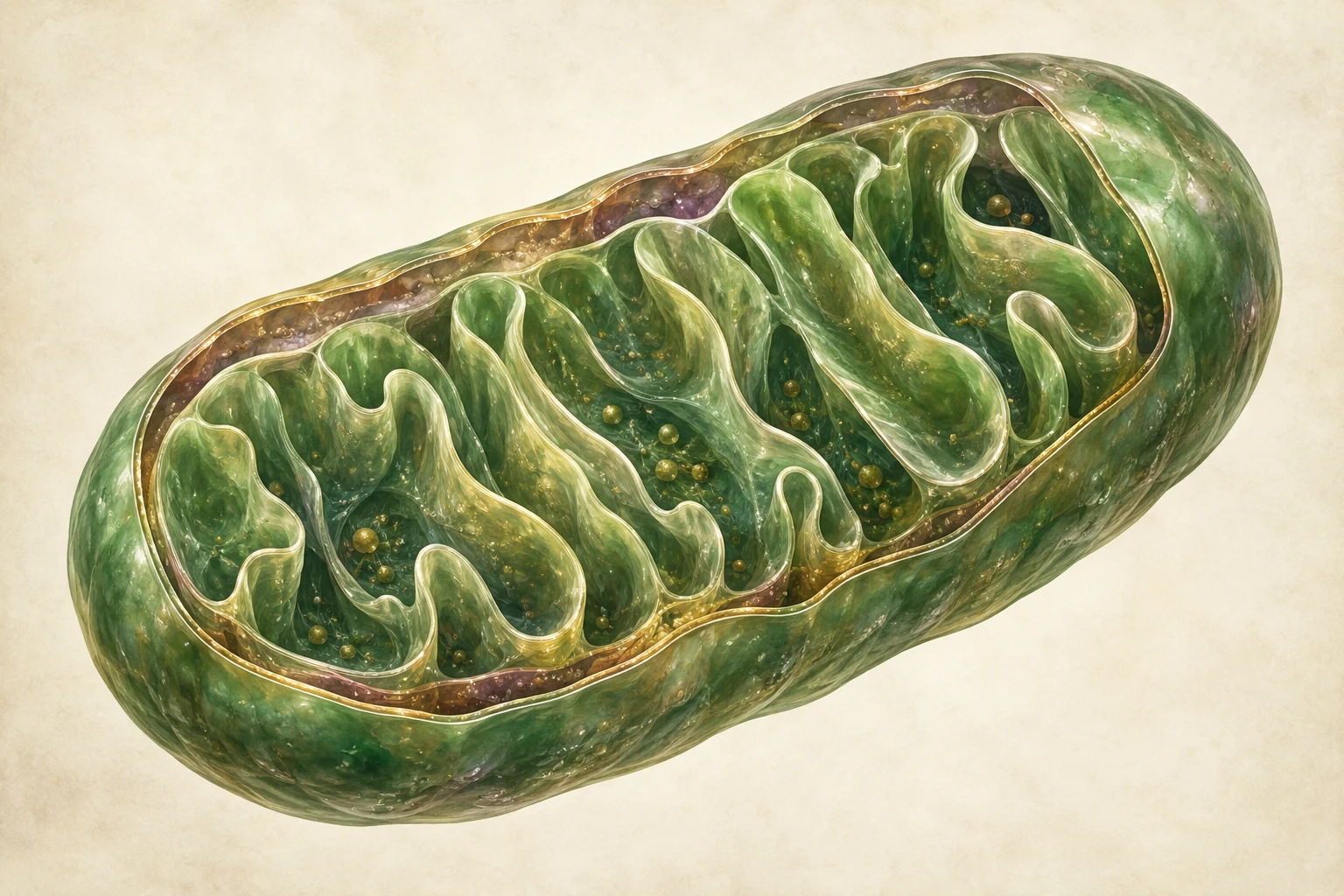
Electron transfer supports proton pumping from matrix towards intermembrane space. Return through ATP synthase couples the gradient to ATP synthesis. Oxygen accepts electrons at the end of the chain and combines with protons to form water.
Reduced NAD carries reducing equivalents; it is not ATP and does not flow through ATP synthase instead of protons.
Correct link: Oxygen accepts electrons and combines with protons to form water.
Oxygen acts as the terminal electron acceptor in the aerobic chain. Removing this acceptor disrupts sustained electron transfer and coenzyme reoxidation. Oxygen is not a direct reactant in glycolysis.
Breathing supplies oxygen to the organism; cellular respiration describes biochemical pathways.
Correct link: Reduced NAD is reoxidised to NAD, allowing glycolysis to keep using NAD.
Lactate formation reoxidises reduced NAD. Regenerated NAD permits the oxidation stage of glycolysis to continue and glycolysis can retain its small net ATP yield. Lactate formation does not itself provide a large new ATP yield.
Do not say that anaerobic lactate production runs oxidative phosphorylation normally.
Without oxygen as the terminal acceptor, sustained electron flow through the mitochondrial chain is disrupted. Reduced NAD is not reoxidised through that route at the normal rate, so it can accumulate. Proton pumping and the gradient-driven ATP supply decline. Glycolysis may continue if another route regenerates NAD.
Do not claim that oxygen directly converts glucose to ATP in one reaction.
Glycolysis needs NAD for oxidation of intermediates. Reduction of pyruvate to lactate regenerates NAD, allowing glycolysis and its substrate-level ATP production to continue. It does not restart oxygen-dependent mitochondrial electron transfer, so the usual oxidative-phosphorylation supply is not restored.
Avoid a fixed universal ATP total; actual yield depends on the conditions and system.
Original selective revision practice. Full requirements: AQA specification · OCR A specification.