Define the measurement
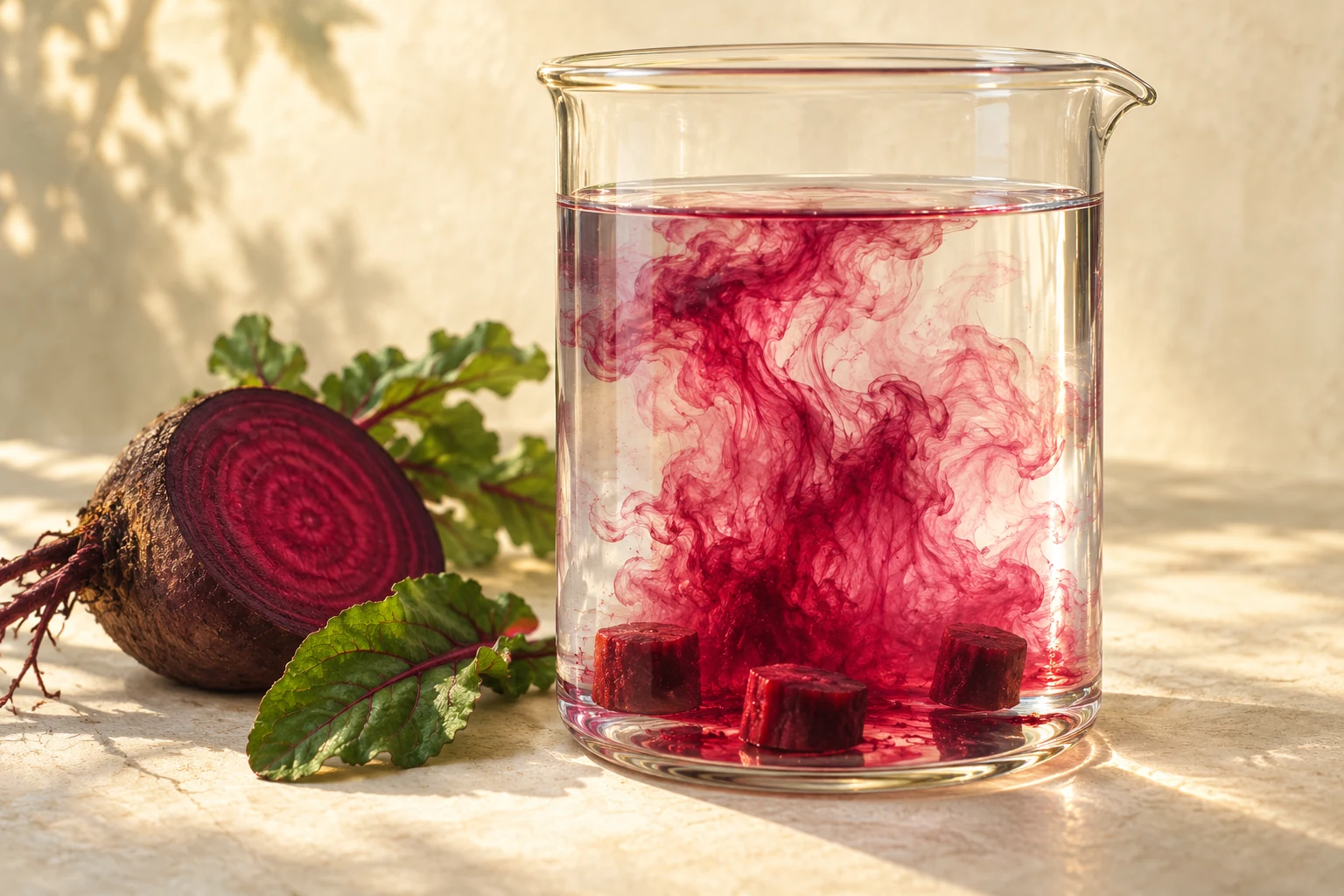
A beetroot investigation can measure the absorbance of pigment in the surrounding solution after a specified treatment. This is an indirect measure of leakage, rather than a direct image of membrane damage. Pigment release involves barriers including the vacuolar membrane and cell-surface membrane.
Control the tissue comparison
Use comparable pieces from an appropriate source, with similar dimensions and exposed area. Cutting can release pigment before the treatment begins. Consistent rinsing and handling reduce that contribution; they do not guarantee that every tissue piece is biologically identical.
Separate the changed variable
If temperature is varied, keep treatment duration, surrounding solution volume and other relevant conditions comparable. If a solvent concentration is varied, control temperature instead. Consider whether the treatment temperature and the later reading temperature are the same or deliberately standardised.
Use the colorimeter consistently
Use a suitable blank, wavelength and consistent cuvette orientation and handling. Higher absorbance can indicate more pigment under a suitable working relationship. Strong readings outside the useful range may need a documented dilution; mixing up absorbance and transmission reverses the interpretation.
Explain and limit the result
A greater mean pigment reading can be consistent with increased permeability. Temperature can influence lipid behaviour and membrane-protein structure. The absorbance alone does not reveal exactly which molecular changes occurred, and variation in pigment content or cut surface can affect comparisons.
Worked data example
Three independent tissue samples treated alike give absorbances 0.22, 0.25 and 0.28 after a consistent blank correction. Calculate their mean and range.
Mean = (0.22 + 0.25 + 0.28)/3 = 0.25. Range = 0.28 − 0.22 = 0.06. These summarise the readings; they do not prove a significant difference from another treatment.
Why does leaving surface pigment from cutting weaken a leakage comparison?
Some measured pigment would already be present before the intended treatment. Differences in cutting and rinsing could then affect readings independently of the variable being investigated.