Sequence, connect, explain
Two ordering chains, two missing links and two written explanations. Say or write your explanation before revealing the example.
Move the steps using the buttons. No dragging is needed.
Two ordering chains, two missing links and two written explanations. Say or write your explanation before revealing the example.
Move the steps using the buttons. No dragging is needed.
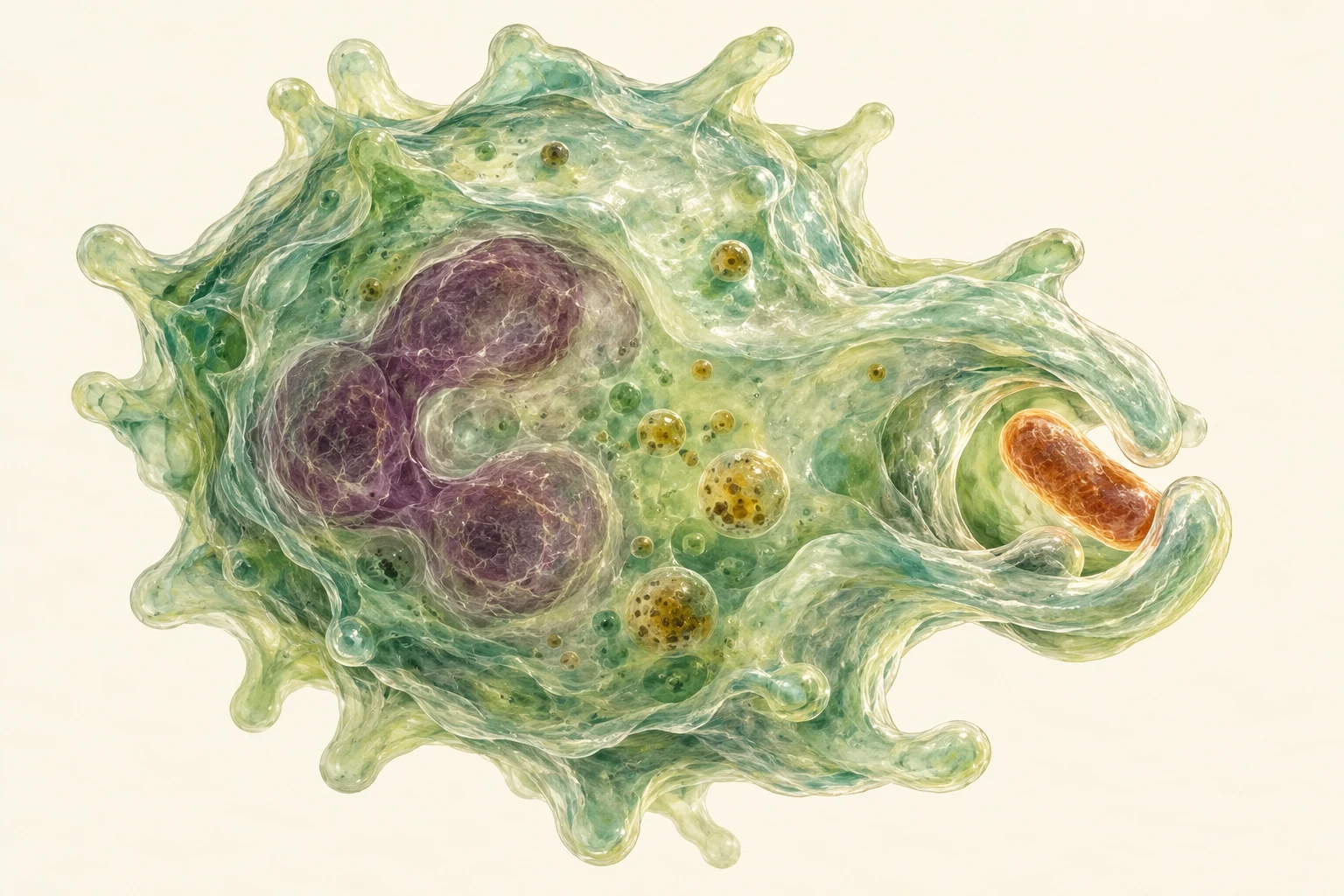
Recognition precedes enclosure. Lysosome fusion brings digestive enzymes into the compartment containing the target. Digestion occurs inside the phagocyte; antibodies may aid recognition but do not themselves engulf the target.
An antibody is a protein, not a cell with lysosomes.
The chain follows a selected T-dependent response, not all B-cell activation. Helper recognition/signalling supports clonal expansion and differentiation. Plasma cells secrete antibodies; other descendants can become memory cells.
The antigen selects cells with suitable receptors; it does not make every lymphocyte invent a new matching receptor.
Correct link: A matching T-cell receptor recognises the presentation, with the necessary activation signals.
Specific recognition plus the necessary signals can activate a helper T cell. Activated helper cells can support other responses through signalling. Receptor specificity matters; presentation is not an instruction for every T cell to respond identically.
Helper T cells support responses by signalling; they are not antibody-secreting plasma cells.
Correct link: Relevant memory cells persist and can respond on re-exposure.
Memory cells with relevant specificity may persist and contribute to faster expansion and effector activity on re-exposure. This does not guarantee complete protection against every infection.
Immune memory refers to cells and a changed response, not a permanent supply of identical antibodies.
An antibody binds a suitable antigen through its specific binding region. Bound antibodies can make a target easier for phagocytes to recognise; antibodies can also aggregate suitable targets. The phagocyte carries out enclosure and lysosomal digestion. Binding and digestion are performed by different components.
Do not say that antibodies are enzymes that directly digest all pathogens.
Vaccination can expose the immune system to antigen and stimulate the person’s own adaptive response, including relevant memory cells. Receiving antibodies supplies an effector molecule directly and can provide temporary protection. That transfer alone does not generate the same antigen-specific memory response.
Do not claim that a vaccine always prevents infection or that passive immunity lasts indefinitely.
Original selective revision practice. Full requirements: AQA specification · OCR A specification.